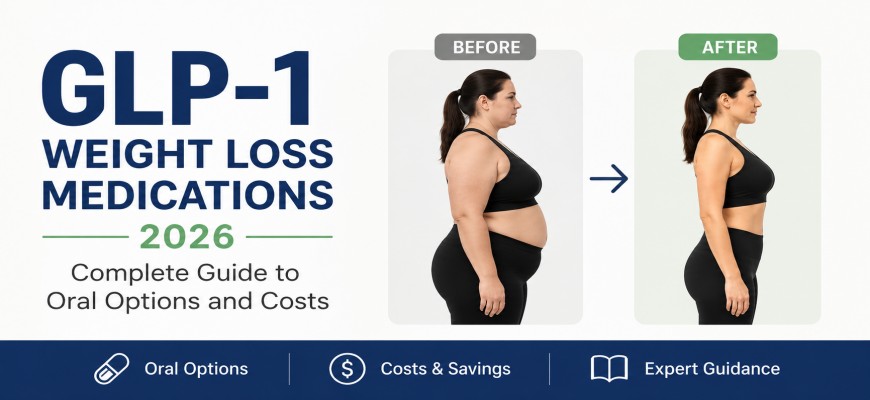
Introduction
What Are GLP-1 Weight Loss Medications?
Why Everyone Is Talking About GLP-1 Drugs in 2026
How GLP-1 Medications Actually Work
Injectable vs Oral GLP-1 Medications
Best GLP-1 Weight Loss Medications Available in 2026
Oral GLP-1 Options Explained
GLP-1 Medication Costs in 2026
How Much Weight Can You Really Lose?
What to Expect During the First Month
Common Side Effects and How to Manage Them
Who Should Avoid GLP-1 Medications?
Frequently Asked Questions
Where to Access GLP-1 Medications Safely
Final Thoughts
If you've spent even a few minutes researching weight loss recently, you've probably come across terms like Ozempic, Wegovy, Mounjaro, Zepbound, or GLP-1 medications.
Just a few years ago, these treatments were primarily used for managing type 2 diabetes. Today, they're changing how doctors approach obesity and weight management around the world.
The reason is simple: they work.
Unlike many traditional diet pills that rely on stimulants or appetite suppressants, GLP-1 medications work with your body's natural hormone systems. They help regulate hunger, improve feelings of fullness, and make it easier to maintain a calorie deficit without feeling like you're constantly fighting cravings.
In 2026, the biggest development isn't just that these medications are effective—it's that many are now available in convenient oral forms. For people who dislike injections or want a simpler treatment routine, this represents a major breakthrough.
Whether you're exploring your options for the first time, comparing oral and injectable treatments, or trying to understand the costs involved, this guide will walk you through everything you need to know in plain English.
By the end of this article, you'll understand:
How GLP-1 medications work
Which options are available in 2026
The differences between injections and tablets
Expected weight loss results
Common side effects
Typical costs and insurance considerations
How to access medications safely through licensed providers
Let's start with the basics.
The excitement surrounding GLP-1 medications isn't marketing hype—it comes from real-world results.
Historically, many weight loss treatments produced modest results. Losing 5% of body weight was often considered a successful outcome.
GLP-1 therapies changed those expectations dramatically.
Many patients now lose between 15% and 25% of their starting body weight while following a medically supervised treatment plan. For someone weighing 100 kilograms (220 pounds), that could mean losing 15–25 kilograms (33–55 pounds).
Beyond weight loss, researchers have also observed benefits such as:
Better blood sugar control
Reduced cardiovascular risk factors
Lower blood pressure
Improved cholesterol levels
Reduced food cravings
Better long-term weight maintenance
For many people, the biggest benefit isn't simply seeing a lower number on the scale. It's finally feeling in control of their appetite rather than constantly battling hunger.
This is one reason why demand for GLP-1 medications continues to grow throughout 2026.
If the term "GLP-1" sounds like something pulled from a medical textbook, don't worry—you don't need a science degree to understand it.
Think of GLP-1 as one of your body's natural appetite-control systems.
Every time you eat, your intestines release a hormone called glucagon-like peptide-1 (GLP-1). This hormone sends several important messages throughout your body:
"You've eaten enough."
"Slow down digestion."
"Reduce hunger."
"Manage blood sugar levels."
The problem is that many people struggling with obesity, insulin resistance, or type 2 diabetes don't experience these signals strongly enough.
That's where GLP-1 medications come in.
These medications mimic the natural GLP-1 hormone and amplify its effects. As a result, many people feel satisfied with smaller meals, snack less frequently, and experience fewer cravings throughout the day.
Unlike traditional weight-loss pills that often rely on stimulants to suppress appetite, GLP-1 medications work with biological processes that already exist in your body.
This difference is one of the biggest reasons these medications have become so popular among both healthcare professionals and patients.
Interestingly, GLP-1 medications weren't originally created for weight loss.
Researchers first developed them to help people manage type 2 diabetes.
During clinical trials, doctors noticed something unexpected: many patients were losing significant amounts of weight.
The weight-loss results were often far greater than what was seen with previous medications.
Over time, additional studies confirmed these findings, leading to separate approvals for obesity and chronic weight management.
Today, millions of people worldwide use GLP-1 medications for either diabetes management, weight loss, or both.
Several medications belong to the GLP-1 family, though some work slightly differently than others.
| Medication | Active Ingredient | Main Use |
|---|---|---|
| Wegovy | Semaglutide | Weight Loss |
| Ozempic | Semaglutide | Type 2 Diabetes |
| Rybelsus | Oral Semaglutide | Diabetes & Weight Management |
| Saxenda | Liraglutide | Weight Loss |
| Victoza | Liraglutide | Diabetes |
| Zepbound | Tirzepatide | Weight Loss |
| Mounjaro | Tirzepatide | Diabetes |
Among these options, semaglutide and tirzepatide currently generate the most attention because they consistently produce some of the strongest weight-loss results seen in modern medicine.
For many years, GLP-1 medications required injections.
Although most injections were only needed once per week, some people still felt uncomfortable using needles.
In 2026, oral GLP-1 medications are becoming increasingly popular because they offer a more convenient option for suitable patients.
Many people prefer taking a tablet each morning rather than managing injectable pens.
This shift has made GLP-1 therapy more accessible than ever before and has encouraged many patients who previously avoided treatment to explore their options.
Not exactly.
One of the biggest misconceptions online is that these medications magically melt away fat without any effort.
The reality is more nuanced.
GLP-1 medications make it easier to eat less by reducing hunger and improving feelings of fullness.
However, the most successful patients still combine medication with:
Healthier eating habits
Increased physical activity
Better sleep
Consistent medical monitoring
Long-term lifestyle changes
Think of GLP-1 medications as a powerful tool—not a replacement for healthy habits.
Used correctly, they can dramatically improve your chances of achieving meaningful and sustainable weight loss.
 Xerava (Eravacycline) for Complicated Intra-Abdominal Infections: Fluorocycline Antibiotic Explained (FDA 2018)
Dalvance (Dalbavancin) for Skin Infections: Single-Dose and Two-Dose Options Explained (FDA 2014)
Xerava (Eravacycline) for Complicated Intra-Abdominal Infections: Fluorocycline Antibiotic Explained (FDA 2018)
Dalvance (Dalbavancin) for Skin Infections: Single-Dose and Two-Dose Options Explained (FDA 2014)
 Fetroja (Cefiderocol) for Complicated UTIs: First Siderophore Cephalosporin and the Mortality Warning Every Patient Should Know (FDA Approved 2019)
 Exblifep for Complicated UTIs: FDA Approval, Efficacy, & Usage Guide