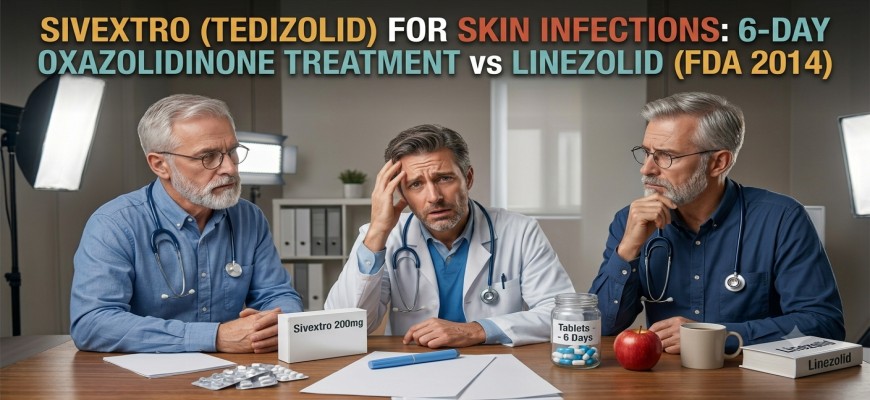
Sivextro (Tedizolid) for Skin Infections: 6-Day Oxazolidinone Treatment vs Linezolid (FDA Approved 2014)
Quick answer: Sivextro (tedizolid phosphate) is an oxazolidinone antibiotic available as oral tablets and as an intravenous injection. The U.S. Food and Drug Administration approved it on June 20, 2014, for adults with acute bacterial skin and skin structure infections (ABSSSI) caused by susceptible gram-positive bacteria, including methicillin-resistant Staphylococcus aureus (MRSA). Its labeled course is 200 mg once daily for six days, shorter than the ten-day linezolid course used as the comparator. In the two phase 3 ESTABLISH trials, which together enrolled 1,315 adults, tedizolid was as effective as linezolid for skin infection treatment. The label carries warnings for myelosuppression with use beyond six days, serotonin syndrome, and C. difficile infection. Treatment decisions belong to your clinician.
Reading time: about 10 to 12 minutes. This article is educational and does not replace medical advice. Skin infections can spread, so contact a clinician promptly if redness, swelling, or fever develops.
Why Skin Infections Matter
More Than a Surface Problem
Acute bacterial skin and skin structure infections include cellulitis, which spreads through the deeper layers of skin, major abscesses, and infected wounds. They are among the most common reasons people seek care for bacterial infection. Mild cases may be treated at home, but larger or spreading infections can become serious quickly.
MRSA Changes the Choice
Staphylococcus aureus, including MRSA, is a frequent cause of these infections. MRSA does not respond to methicillin and related drugs, so clinicians need other options. Many people with skin infections are treated with oral antibiotics, but some need IV therapy or hospital care.
Why Duration Matters
Long antibiotic courses increase the chance of side effects and can add to resistance pressure. A shorter, effective course is valuable when it can be used safely.
Key Takeaways
- Sivextro (tedizolid phosphate) received FDA approval on June 20, 2014, for adults with ABSSSI caused by susceptible gram-positive bacteria, including MRSA.
- The labeled course is 200 mg once daily for six days, compared with ten days of linezolid in ESTABLISH-2.
- The ESTABLISH-1 and ESTABLISH-2 trials together enrolled 1,315 adults and showed tedizolid was as effective as linezolid for ABSSSI.
- Sivextro is available as oral tablets and IV injection, allowing flexible treatment.
- Warnings include myelosuppression with use beyond six days, serotonin syndrome with serotonergic drugs, and C. difficile infection.
- Tedizolid has not been evaluated in neutropenic patients, so alternative therapies should be considered in that group.
What Is Sivextro
Brand and Generic Names
Sivextro is the brand name for tedizolid phosphate. The drug was developed by Cubist Pharmaceuticals, which was later acquired by Merck, the company that markets Sivextro today. Tedizolid phosphate is a prodrug, meaning the body converts it to the active form, tedizolid.
Dosage Forms
Sivextro is available as 200 mg oral tablets and as a 200 mg single-dose vial for intravenous infusion. The two forms share the same dosing schedule, which makes switching simpler.
Drug Class
Tedizolid belongs to the oxazolidinone class, which also includes linezolid. Oxazolidinones have a distinct mechanism and are used for gram-positive infections, including those caused by resistant staphylococci and enterococci.
FDA Approval: June 20, 2014
The Decision
The FDA approved Sivextro on June 20, 2014, for adults with ABSSSI caused by designated susceptible gram-positive bacteria. The approval covers infections caused by methicillin-resistant and methicillin-susceptible Staphylococcus aureus, various Streptococcus species, and Enterococcus faecalis.
Advisory Committee Support
The FDA's Anti-Infective Drugs Advisory Committee voted unanimously in March 2014 in favor of approval, before the final decision.
Priority Review and Designation
Sivextro was designated a Qualified Infectious Disease Product and received priority review, reflecting the FDA's recognition of the need for effective skin infection treatments.
Stewardship Language
The FDA emphasized that tedizolid should be used only to treat or prevent infections that are proven or strongly suspected to be caused by bacteria. This wording protects the drug's effectiveness.
The Oxazolidinone Class
A Newer Class
Oxazolidinones are a class of synthetic antibiotics introduced in the early 2000s. They work differently from beta-lactams, glycopeptides, and many other classes, which means cross-resistance with those drugs is generally limited.
Linezolid as the Reference
Linezolid is the best-known oxazolidinone. It is effective against many gram-positive infections but requires longer courses in skin infections and has a higher risk of blood count changes when used for extended periods.
Where Tedizolid Fits
Tedizolid is a second-generation oxazolidinone designed to offer similar efficacy with a shorter course and a different safety profile in clinical trials. Its place in treatment depends on the infection, patient, and local practice.
How Tedizolid Works
Protein Synthesis Inhibition
Tedizolid binds to the bacterial 50S ribosomal subunit and prevents the formation of the complex needed to start protein synthesis. Without functional proteins, bacteria cannot grow and replicate.
Bacteriostatic Activity
In vitro studies showed that tedizolid is bacteriostatic against enterococci, staphylococci, and streptococci. This means it inhibits growth rather than directly killing bacteria, so the immune system and healthy tissue help clear the infection.
Why It Matters Clinically
Because the drug inhibits growth rather than killing bacteria outright, clinicians rely on patient response and source control, such as drainage of abscesses, to guide treatment.
Which Bacteria It Targets
Labeled Organisms
The labeled indication covers susceptible strains of Staphylococcus aureus, including MRSA and methicillin-susceptible strains, various Streptococcus species, and Enterococcus faecalis. Confirm the full list in the current prescribing information.
Gram-Negative Organisms
Tedizolid is not used for gram-negative infections such as those caused by E. coli or Pseudomonas. Those infections require different antibiotics.
Culture Matters
Wound or abscess cultures identify the organism and its susceptibility pattern. Results help confirm whether tedizolid is appropriate.
Approved Use and Labeling Limits
Who Is Eligible
The labeled population is adults with ABSSSI caused by susceptible gram-positive bacteria. Pediatric use is outside the current labeled indication.
Not Approved For
The drug is not approved for bacteremia, endocarditis, osteomyelitis, or pneumonia as labeled indications. Use outside the label is a clinical decision for the treating team.
Neutropenia
The FDA noted that tedizolid has not been evaluated in neutropenic patients, and alternative therapies should be considered for those patients.
The ESTABLISH-1 Trial
Design
ESTABLISH-1 was a randomized, double-blind, multicenter, noninferiority phase 3 trial comparing oral tedizolid with oral linezolid in adults with ABSSSI. The trial enrolled 668 patients in total across the two ESTABLISH studies' reporting structure, as described in published summaries.
Regimens
Tedizolid was given at 200 mg once daily for six days. Linezolid was given at 600 mg every 12 hours for ten days, the standard linezolid course for skin infections.
Primary Endpoint
The primary endpoint was early clinical response at a defined time point after treatment began, reflecting how well the infection responded to therapy.
The ESTABLISH-2 Trial
Design
ESTABLISH-2 was a randomized, double-blind, international phase 3 trial comparing intravenous tedizolid with intravenous linezolid, with an option to switch to oral therapy. The trial enrolled 666 patients.
Regimens
Patients received tedizolid for six days or linezolid for ten days, with IV-to-oral switching allowed according to the protocol. This design reflected how skin infections are often treated in practice.
Publication
The results were published in The Lancet Infectious Diseases in 2014, and the sponsor announced the publication in June 2014.
Trial Results Explained
Combined Results
Together, the two ESTABLISH trials enrolled 1,315 adults. Tedizolid met the noninferiority criteria for early clinical response and was described by the FDA as as effective as linezolid.
Clinical Response Later On
Clinical responses were similar at later assessments, such as 7 to 14 days after treatment, according to the approval coverage.
Reading the Results
Noninferiority does not prove superiority. The shorter tedizolid course achieved comparable results, which is the central finding. Trial results apply to the enrolled populations, and clinicians interpret them in the context of each patient.
Why a Six-Day Course Matters
Fewer Days of Exposure
A six-day course means fewer days of drug exposure than a ten-day linezolid course. Shorter exposure can reduce the chance of side effects that depend on duration, particularly blood count changes.
Adherence
Shorter courses can be easier to complete, which supports better adherence and fewer missed doses.
Limits of the Shorter Course
Not every infection can be treated in six days. Severe, deep, or slowly responding infections may need longer therapy or additional treatment, such as drainage. Your team makes that determination.
Dosing and Administration
Labeled Regimen
The labeled regimen is 200 mg once daily for six days, given as an oral tablet or as an IV infusion. Confirm the current instructions in the prescribing information on DailyMed.
Food
Oral tedizolid can be taken with or without food. Your pharmacist can confirm instructions for your prescription.
Missed Doses
If a dose is missed, take it as soon as you remember unless it is almost time for the next dose. Do not double up. Ask your team if you are unsure.
Oral and IV Options
Oral Tablets
Oral tablets allow treatment at home for many patients who are well enough to take medication by mouth. Clinicians decide whether oral therapy is appropriate.
IV Injection
IV tedizolid is used when oral therapy is not practical or when patients need hospital care. The IV and oral forms use the same daily dose.
Switching
Patients may switch between IV and oral forms as their condition changes, which the ESTABLISH-2 design reflected.
Kidney and Liver Function
Kidney Function
The label does not require dose adjustment for kidney impairment, according to the approval information. Your team still monitors kidney function as part of overall care.
Liver Function
Tedizolid is not expected to need dose changes for mild liver impairment, but liver function should be considered in patients with significant liver disease. Confirm current guidance in the label.
Monitoring
Routine monitoring focuses on infection response and any side effects that emerge during treatment.
Common Side Effects
Most Frequent Effects
The most common side effects in clinical trials were nausea, headache, diarrhea, vomiting, and dizziness. Most were mild to moderate.
What to Do
Tell your care team if side effects are bothersome or persistent. Some can be managed with simple measures, and your team can adjust the plan if needed.
Infusion-Site Reactions
For IV use, pain, redness, or swelling at the site can occur. Report these to your nurse.
Blood Count Changes and Duration
The Warning
Oxazolidinones can cause myelosuppression, including low platelet and red or white blood cell counts. The risk rises with longer courses. The label warns about use beyond six days, which is why the labeled course is short.
Who Is at Higher Risk
People with pre-existing blood disorders, kidney disease, or those receiving other medicines that affect blood counts may need closer monitoring.
Monitoring
If treatment must continue beyond six days, the care team should check complete blood counts and reassess the plan.
Serotonin Syndrome Warning
What It Is
Serotonin syndrome is a potentially serious reaction caused by excess serotonin activity. It can cause agitation, confusion, rapid heartbeat, sweating, shaking, muscle stiffness, fever, or diarrhea.
Why Tedizolid Is Included
Oxazolidinones have monoamine oxidase inhibitor activity, which can interact with serotonergic drugs. Tedizolid has been reported to have less of this effect than linezolid, but the label still warns about it.
Medicines to Review
Antidepressants such as SSRIs and SNRIs, certain migraine medicines, and some other drugs can raise the risk. Tell your team about all medicines you take.
C. difficile Warning
Why Antibiotics Raise the Risk
Antibiotics can disrupt normal gut bacteria, allowing C. difficile to grow and produce toxins. This risk exists with nearly all antibacterial drugs.
What to Report
Watery diarrhea, fever, abdominal pain, or blood in the stool should be reported promptly. C. difficile needs specific treatment, so evaluation matters.
Who Should Not Receive Sivextro
Known Allergy
People with a known allergy to tedizolid or other oxazolidinones should not take Sivextro without specialist review.
Neutropenia
Tedizolid has not been evaluated in neutropenic patients. Alternative therapies should be considered.
Serotonergic Medicines
People taking serotonergic drugs need a careful risk review before starting tedizolid.
Drug Interactions
Serotonergic Drugs
Antidepressants, some migraine treatments, and other serotonergic medicines require review because of serotonin syndrome risk.
Medication Review
Give your care team a full list of medications, including prescriptions, over-the-counter products, and supplements. Pharmacists check for interactions before starting therapy.
Medicines That Affect Blood Counts
Drugs that can lower blood counts add to the risk of myelosuppression and should be reviewed.
How Sivextro Compares With Other Options
Linezolid
Linezolid was the comparator in both ESTABLISH trials. It requires a longer course for skin infections and has a higher risk of blood count changes with extended use.
Vancomycin and Dalbavancin
Vancomycin is IV-only and requires frequent dosing. Dalbavancin is long-acting and given as one or two infusions. Each has a different place in care.
Doxycycline and Trimethoprim-Sulfamethoxazole
Oral options such as these are used for some skin infections, but resistance patterns and labeled uses differ. Your clinician selects the right option based on culture and local data.
Antibiotic Stewardship
Use Only When Indicated
Many minor skin infections are managed with wound care and drainage alone. Antibiotics should be used when infection is proven or strongly suspected to be bacterial.
Culture Guidance
Cultures from wounds or abscesses guide whether tedizolid remains the right choice.
Protecting the Drug
Overuse of any antibiotic accelerates resistance. Responsible use helps keep tedizolid and linezolid effective.
Availability and Cost
Availability
Sivextro is available in pharmacies as tablets and through hospitals and clinics as an IV injection. Availability depends on the setting, so your care team can confirm.
Cost
Sivextro is a branded antibiotic and typically costs more than generic linezolid. The shorter course may affect total cost. Ask your pharmacist or insurer for current figures.
Coverage
Coverage for FDA-approved indications is generally more straightforward. Prior authorization may be required, and pharmacy staff can help.
Pregnancy, Breastfeeding, and Children
Pregnancy
Pregnant patients with skin infections should discuss treatment options with their clinician. Decisions should weigh the benefits against the limited available data.
Breastfeeding
Discuss breastfeeding with your care team before starting treatment.
Children
The current labeled indication is for adults. Use in children is outside the labeled population and requires specialist judgment.
Questions to Ask Your Care Team
- Is my skin infection caused by a susceptible gram-positive organism?
- Is a six-day course appropriate for my infection, or do I need longer treatment?
- Am I taking any medicines that interact with serotonin or affect blood counts?
- Should I have blood tests during treatment?
- What signs of infection spread, diarrhea, or serotonin syndrome should I report right away?
Frequently Asked Questions
Q: What is Sivextro used for?
A: Sivextro is approved for adults with acute bacterial skin and skin structure infections caused by susceptible gram-positive bacteria, including MRSA.
Q: When was it approved?
A: The FDA approved it on June 20, 2014.
Q: How long is the course?
A: The labeled course is 200 mg once daily for six days. Your team decides the right duration for your infection.
Q: Is it as effective as linezolid?
A: In the ESTABLISH trials, tedizolid was as effective as linezolid for skin infections, with a shorter course.
Q: Can I take it by mouth?
A: Yes, as tablets, or by IV injection when needed.
Q: What is serotonin syndrome?
A: It is a serious reaction caused by excess serotonin, which can occur with some antidepressants and other drugs. Report agitation, confusion, fever, sweating, or muscle stiffness right away.
Q: Does Sivextro treat gram-negative infections?
A: No. It is used for susceptible gram-positive skin infections.
Q: Do I need blood tests?
A: Your team may check blood counts, especially if treatment continues beyond six days or if you have blood disorders.
Medical Disclaimer
This article is for general education only and does not provide medical advice, diagnosis, or treatment. Skin infections can spread and require evaluation by a qualified clinician. Do not start, stop, or change any antibiotic without guidance from your care team. For dosing, warnings, and interactions, consult the current U.S. prescribing information on DailyMed. If you have spreading redness, fever with chills, rapid heartbeat, confusion, or trouble breathing, seek emergency care immediately.
Sources and Further Reading
- U.S. FDA approval of Sivextro (tedizolid phosphate), June 20, 2014
- FDA press announcement on approval of tedizolid for ABSSSI, June 20, 2014
- Drugs.com Sivextro FDA approval history
- ESTABLISH-1 and ESTABLISH-2 trial publications, including the ESTABLISH-2 report in The Lancet Infectious Diseases, 2014
- Cubist Pharmaceuticals announcement of ESTABLISH-2 publication, June 6, 2014
- FDA Anti-Infective Drugs Advisory Committee vote summary, March 31, 2014
- Sivextro U.S. Prescribing Information, including dosing, warnings, and the myelosuppression and serotonin syndrome sections
This article reflects information available as of October 2026. Confirm current prescribing details with your healthcare provider and the latest FDA labeling. For more on MyOnlineMedShop, visit our blog or contact us.