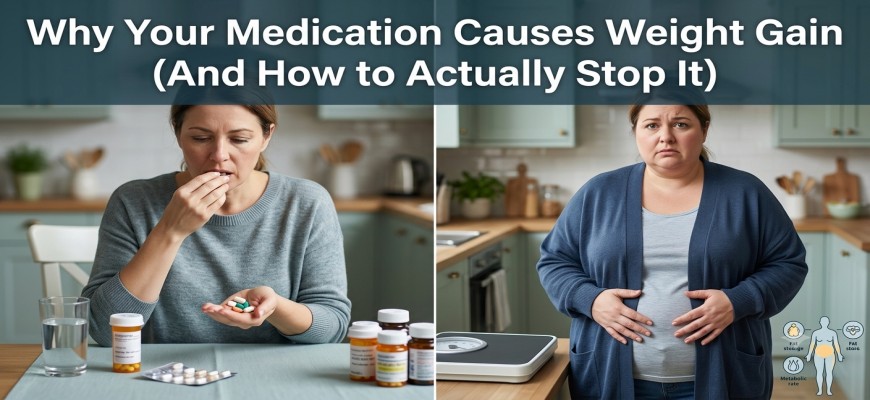
Why Your Medication Causes Weight Gain (And How to Actually Stop It)
You started taking a medication. For the first time in years, your mental health improved. Your anxiety dropped. Your depression lifted. You felt like yourself again. Then, around week 4 or 5, something changed. You gained 7 pounds. Then 15. Then 30. And no matter how hard you exercise or how carefully you eat, the weight keeps climbing.
You're not lazy. You're not lacking willpower. Your doctor might even say "just exercise more" — which makes you feel worse because you ARE exercising. The truth that nobody tells you: your medication is actively working against your body's normal appetite and metabolism regulation. This isn't a character flaw. It's pharmacology.
After 17 years as a licensed pharmacist watching patients experience this exact scenario, I can tell you: medication-induced weight gain is real, it's measurable, and it's solvable — but not with the solutions your doctor probably suggested. This guide breaks down exactly which medications cause it, WHY they cause it, and the actual strategies that work.
You will read advice online saying "medication-induced weight gain is rare" or "if you exercise, you won't gain weight." Both are lies designed to make you feel guilty.
The truth: Medication-induced weight gain is common (affects 25-60% of users depending on the drug), measurable (can be tracked in clinical trials), and real (not a character flaw or lack of discipline).
Here's what happens in your brain and body:
Your normal appetite is regulated by hormones and neurotransmitters — serotonin, dopamine, leptin, ghrelin — all working in concert to tell you when to eat and when to stop. Your medication directly interferes with this system. It's not that you suddenly lack willpower. It's that your brain's "full" signal is broken.
Real Talk: A person on certain medications can exercise 5 hours a week, eat 1500 calories, and still gain weight. This isn't rare or imaginary. It's biochemistry. The sooner you accept this, the sooner you can fix it instead of blaming yourself.
Your brain has appetite-controlling centers. The hypothalamus is the command center. It receives signals from your body saying "you're full, stop eating" or "you're hungry, eat more."
Certain medications interfere with the neurotransmitters that carry these signals. When you take them, your hypothalamus gets confused. It stops receiving "full" signals. Or it receives extra "hungry" signals. Or it stops caring about fullness altogether.
This happens through several pathways:
The result: You feel genuinely hungrier. Food is more rewarding. Your body burns fewer calories. You gain weight despite not changing your behavior. This is not weakness. This is a predictable drug effect.
Selective serotonin reuptake inhibitors (SSRIs) are the most commonly prescribed antidepressants. They're also the most common medication-related weight gain cause.
Which SSRIs cause the most weight gain?
| SSRI | Average Weight Gain | Timeline | Mechanism |
|---|---|---|---|
| Paroxetine (Paxil) | 8-12 lbs over 6 months | Starts week 2-3 | Increased appetite, dopamine reduction |
| Sertraline (Zoloft) | 5-8 lbs over 6 months | Starts week 3-4 | Moderate appetite increase |
| Fluoxetine (Prozac) | 3-6 lbs over 6 months | Starts week 4-6 | Mild appetite increase; some users lose weight initially |
| Citalopram (Celexa) | 6-10 lbs over 6 months | Starts week 3-4 | Moderate appetite increase |
| Escitalopram (Lexapro) | 7-11 lbs over 6 months | Starts week 2-3 | Appetite increase, dopamine reduction |
Why do some SSRIs cause more weight gain than others? It comes down to which neurotransmitter systems they affect beyond just serotonin. Paroxetine affects dopamine more, which increases hunger. Fluoxetine has more subtle effects on appetite.
SNRIs (serotonin-norepinephrine reuptake inhibitors) like venlafaxine and duloxetine have similar weight gain profiles to SSRIs, though users often report slightly less weight gain overall.
Antipsychotics are in a different category entirely. If SSRIs are moderate weight gainers, antipsychotics are the heavyweights.
| Antipsychotic | Average Weight Gain | Timeline | Risk Level |
|---|---|---|---|
| Clozapine (Clozaril) | 15-25 lbs over 6 months | Starts immediately | HIGHEST |
| Olanzapine (Zyprexa) | 12-20 lbs over 6 months | Starts week 2 | HIGHEST |
| Quetiapine (Seroquel) | 8-15 lbs over 6 months | Starts week 2-3 | HIGH |
| Risperidone (Risperdal) | 5-12 lbs over 6 months | Starts week 3-4 | MODERATE-HIGH |
| Aripiprazole (Abilify) | 2-5 lbs over 6 months | Starts week 4-6 | LOWEST |
Antipsychotics cause weight gain through multiple mechanisms: increased appetite, dopamine reduction affecting reward/motivation, metabolic slowdown, and paradoxically, reduced physical activity (apathy effect). They're incredibly effective for psychosis and bipolar disorder, but the weight gain is real and significant.
Aripiprazole is notably different — many users report NO weight gain, and some actually lose weight. If you're on an antipsychotic and gaining rapidly, switching to aripiprazole is often worth discussing with your psychiatrist.
Beta-blockers (metoprolol, propranolol, atenolol) are used for high blood pressure and heart conditions. They cause weight gain through a different mechanism than psychiatric medications.
Beta-blockers reduce your sympathetic nervous system activity — the system responsible for "fight or flight" and metabolism. Lower sympathetic activity means:
Average weight gain: 5-10 lbs over 6 months. Timeline: Usually after 6-8 weeks when the metabolic slowdown becomes apparent.
If you're on a beta-blocker and gaining weight despite eating well, your doctor might consider switching to ACE inhibitors or other blood pressure medications with less metabolic impact.
Most people don't realize antihistamines cause weight gain because they're over-the-counter and seem harmless.
Antihistamines that cause weight gain:
The mechanism: Antihistamines block H1 receptors to reduce allergic symptoms, but H1 receptors also regulate satiety (fullness signals). Block them, appetite increases.
If you take antihistamines regularly for allergies or sleep, weight gain is a real possibility. Switching to non-sedating second-generation options, or using nasal sprays instead, can help.
Corticosteroids (prednisone, dexamethasone, hydrocortisone) cause weight gain through a completely different mechanism than other drugs.
They don't just affect appetite — they affect how your body distributes fat and how your metabolism works at a fundamental level.
Weight gain on corticosteroids is fast and significant: 10-20 lbs possible in just 2-3 months at high doses.
The difference: Corticosteroids are usually short-term (weeks to a few months). When you stop them, weight gain reverses partially. The appetite increases go away immediately, though water weight takes 2-3 weeks to normalize.
Diabetes medications:
Anticonvulsants (for epilepsy and nerve pain):
Migraine medications:
Birth control:
Weight gain doesn't happen randomly. There's a predictable timeline:
| Week | What's Happening | What You'll Notice |
|---|---|---|
| Week 1-2 | Drug reaches therapeutic levels in your system | No weight change yet; therapeutic effects starting (mood improvement, anxiety reduction) |
| Week 2-4 | Appetite centers respond to neurotransmitter changes | Increased hunger, food cravings, especially for carbs/fats. Some people notice appetite change before mood improvement |
| Week 4-8 | Appetite increase becomes consistent; metabolic changes develop | Weight gain becomes measurable (2-5 lbs). You feel genuinely hungrier despite eating normally |
| Week 8-12 | Plateau in appetite change; metabolic slowdown becomes pronounced | Weight gain continues despite not eating more (metabolic rate is lower) |
| Month 4-6 | Adaptation — your body accepts new baseline | Weight stabilizes at new higher level unless you actively intervene |
Why does it start around week 2-4? That's when the medication reaches steady-state levels in your system and neurotransmitter changes become pronounced enough to affect appetite regulation.
This is the question everyone asks, and the honest answer is: it varies dramatically by person and drug.
The predictable range:
Why individual variation is huge:
Some people gain 2 lbs on an SSRI. Some gain 20 lbs on the same dose. The difference comes down to:
The only way to know is to try the medication and monitor. But knowing the typical range helps you understand whether your experience is normal or unusual.
Understanding these three mechanisms changes how you solve the problem:
Your brain's appetite-suppression signals are dampened. You feel genuinely hungrier. You eat more. You gain weight.
Drugs that primarily work this way: SSRIs, some antipsychotics, antihistamines
How to counter it: Appetite-suppressing approaches work (higher protein intake, more fiber, smaller frequent meals), but they're fighting an uphill battle because the drug is actively increasing hunger.
Your body burns fewer calories at rest. You could eat the exact same amount and gain weight because you're expending less energy.
Drugs that primarily work this way: Beta-blockers, some antipsychotics, corticosteroids
How to counter it: Exercise becomes more critical because diet alone won't create the calorie deficit. High-intensity interval training is particularly effective because it boosts metabolic rate for hours post-exercise.
The drug changes where your body stores fat (facial puffiness, "moon face") and causes fluid retention. You gain weight that's not purely calories consumed.
Drugs that primarily work this way: Corticosteroids, some antipsychotics, hormonal contraceptives
How to counter it: This is harder to diet-solve. When you stop the medication, some of it reverses (especially fluid retention). During medication, higher protein intake supports muscle retention despite calorie restriction.
Why This Matters: If your weight gain is 100% appetite increase, eating less helps. If it's 100% metabolic slowdown, eating less barely helps — you need exercise. If it's 100% fluid retention, diet doesn't help much at all. Most medications cause a combination, which is why "just eat less" fails so spectacularly.
Here are strategies that actually work because they address the real mechanisms:
High protein intake does three things for medication-induced weight gain:
Target: 0.8-1.0 grams of protein per pound of body weight. If appetite-increase is your main problem, prioritize protein at every meal and snack.
If the drug is increasing hunger, smaller, frequent meals work better than three big meals because they prevent the blood sugar crashes that trigger intense hunger.
Example: Instead of breakfast, lunch, dinner — try breakfast, mid-morning snack, lunch, afternoon snack, dinner. Each meal/snack is smaller, but you stay fuller longer.
If metabolic slowdown is the primary mechanism, regular cardio doesn't cut it. You need exercise that boosts your resting metabolic rate.
HIIT does this: 15-20 minutes of intense exercise boosts your metabolic rate for 12-24 hours afterward. This amplifies the calorie deficit without requiring hours of exercise.
Regular steady cardio burns calories while you're doing it, but doesn't change your baseline metabolism. HIIT changes it.
If your weight gain feels puffy and your clothes fit differently, fluid retention might be the culprit.
These actually work (evidence-based):
None of these are magic. But combined with the other strategies, they add up.
Sometimes the right answer is: switch medications. But this requires careful planning.
When switching makes sense:
Medications with LESS weight gain (alternatives):
How to switch safely:
NEVER stop a psychiatric medication abruptly or switch without your doctor's guidance. Tapering is usually needed. Work with your prescriber to:
The weight gain often reverses within 2-3 months after switching to a lower-weight-gain alternative.
Supplements with evidence:
| Supplement | Dose | Evidence | Notes |
|---|---|---|---|
| Metformin | 250-500mg daily | Strong | Ask doctor; off-label for weight management; improves insulin sensitivity |
| Chromium picolinate | 200mcg daily | Moderate | Helps reduce carb cravings; modest effect |
| Magnesium glycinate | 300-400mg daily | Moderate | Improves sleep, reduces appetite, helps fluid retention |
| Inositol | 2-4g daily | Moderate | Improves insulin sensitivity; particularly helpful with antipsychotics |
| N-Acetylcysteine (NAC) | 1-2g daily | Moderate | Reduces medication cravings; supports metabolic health |
Medications (prescription) that can help:
Here's the hardest part: Sometimes weight gain is worth it.
If a medication is keeping you alive (preventing suicide, managing psychosis, controlling dangerous symptoms) — and the only alternative is stopping it — then gaining 20 lbs might be the right choice.
Ask yourself honestly:
If the answer to #1 is yes and you can't find alternatives: Stay on the medication. Do your best with diet and exercise. Accept that weight gain is the price of stability and survival. That's a rational, life-affirming choice.
If there are effective alternatives with less weight gain: The conversation with your doctor shifts. It becomes worth trying the switch.
No. If you switch medications or stop the medication (with doctor guidance), weight gain usually reverses over 3-6 months. The faster it came on, the faster it usually comes off — but only if you address the appetite or metabolic changes that developed.
Many doctors don't prioritize this despite it being a known side effect. Some assume you'll only gain "a little." Some don't think to mention it. It's a gap in communication, not your fault for being surprised.
Not reliably. If the medication is increasing your hunger, "eating less" means fighting genuine appetite signals constantly. It's exhausting and usually fails. That's why medication change or adding appetite-regulating supplements often works better.
Exercise helps but rarely solves it alone. If a drug is increasing appetite, exercise creates the deficit but hunger increases correspondingly. Diet + exercise + potentially medication change works better than either alone.
Fluoxetine (Prozac) causes the least. Bupropion (Wellbutrin) actually causes weight LOSS in many users. Talk to your doctor about trying these if weight gain is a serious concern.
Most diet pills work through appetite suppression (stimulants). Combining with an SSRI that's already affecting your nervous system can cause heart palpitations, severe anxiety, insomnia. Don't do this without doctor approval. Metformin is safer for this combination.
If you just stop eating the extra food the drug was making you want, weight comes off at normal rate (1-2 lbs/week with moderate deficit). If metabolic rate has slowed, it takes longer. Most people lose 50-75% of medication-induced weight within 3-6 months after discontinuing.
That's the core conflict. You have options: (1) Switch to a lower-weight-gain alternative, (2) Add a medication to counteract it (topiramate, metformin), (3) Commit seriously to diet/exercise/supplementation, or (4) Accept the weight as the price of mental health stability. All are valid depending on your situation.
Medication-induced weight gain is real, measurable, and not your fault. Your brain chemistry changed when you took the drug. You're not lacking willpower — you're experiencing pharmacology. The good news: it's solvable. Whether through medication switching, strategic supplementation, targeted exercise, or acceptance that the weight gain is worth the mental health benefit — there's a path forward. The first step is acknowledging it's real, then working with your doctor to find the solution that fits YOUR life and YOUR priorities.
Medical Disclaimer: This article is provided for general educational purposes and reflects current pharmacological information about medication side effects. It does not constitute personal medical advice. Never stop, start, or change a medication without consulting a qualified healthcare provider. Weight gain and appetite changes are complex and multi-factorial — this article addresses medication-related causes specifically. Individual responses vary based on genetics, metabolism, diet, exercise, and other medications. If you're experiencing significant weight gain on a medication, discuss it with your prescriber to develop an appropriate management strategy.

 Fetroja (Cefiderocol) for Complicated UTIs: First Siderophore Cephalosporin and the Mortality Warning Every Patient Should Know (FDA Approved 2019)
Exblifep for Complicated UTIs: FDA Approval, Efficacy, & Usage Guide
Fetroja (Cefiderocol) for Complicated UTIs: First Siderophore Cephalosporin and the Mortality Warning Every Patient Should Know (FDA Approved 2019)
Exblifep for Complicated UTIs: FDA Approval, Efficacy, & Usage Guide
 Nuzyra (Omadacycline) for Pneumonia and Skin Infections: Modernized Tetracycline with IV-to-Oral Options (FDA Approved 2018)
 Zemdri (Plazomicin) for Complicated UTIs: Newer IV Aminoglycoside for Resistant Infections (FDA Approved 2018)