
"SickTok" Is Sending People to the ER With Self-Diagnosed Conditions and Internet-Prescribed Treatment Plans — Here's Why Doctors Are Alarmed
A pharmacist's guide to the viral self-diagnosis trend reshaping doctor's appointments, why it spreads so effectively, which conditions are most affected, and how to use social media health content without replacing actual medical care.
Doctors have a name for what's showing up in their exam rooms now: "SickTok." Physicians across specialties report a sharp increase in patients arriving not with a description of symptoms, but with a self-assigned diagnosis, a treatment plan, and sometimes a specific medication request — all sourced from a 45-second video by a stranger with no medical training and no knowledge of the patient's actual history.
This isn't a story about mocking people for looking things up online. Health information-seeking is a completely normal, often positive response to feeling unwell, and social media has genuinely helped some people — particularly those historically underdiagnosed, like adult women with ADHD or autism — recognize patterns worth bringing to a doctor. The real problem is narrower and more specific: a growing pattern of skipping the "bring it to a doctor" step entirely, and instead self-treating based on unverified internet content, sometimes with real physical consequences. This guide breaks down exactly how that pattern develops, which conditions it clusters around, why it's dangerous even when well-intentioned, and how to use online health content as a helpful starting point instead of a replacement for real diagnosis.
"SickTok" is the term healthcare workers have started using for a specific pattern: short-form video content, mostly on TikTok but spreading across other platforms, where creators describe symptom lists, assign them a specific diagnosis, and recommend a treatment approach — all within the space of a single 30-to-60-second clip, and almost always without any medical license, clinical training, or ability to examine the viewer in front of them.
The pattern isn't limited to any one condition. Physicians report seeing it across a wide range of diagnoses, from attention and mood disorders to complex physical conditions with overlapping, nonspecific symptoms — fatigue, brain fog, joint pain, dizziness — that are genuinely hard to pin down even with proper testing, and therefore especially easy to misattribute based on a compelling video.
Understanding why this trend has grown so quickly requires looking at a few features specific to short-form video and the platforms hosting it, rather than assuming anything unusual about the people watching it.
Short-form recommendation algorithms tend to favor confident, emotionally engaging content over hedged, nuanced content — and "you might have X, here are 12 signs" performs better than "this could be many things, please see a doctor." The most viral health content is, almost by design, the least epistemically careful.
Long, vague, or medically unexplained symptoms can be exhausting and isolating, especially for people who have felt dismissed by previous medical encounters. A confident video that says "this is what's happening to you, and it's not your fault" can feel like genuine relief — even when it's medically unverified — which makes the content emotionally sticky in a way accurate but uncertain information rarely is.
Viewers who've watched a creator's content for months or years often feel they "know" them, which transfers unearned credibility onto that creator's medical claims — the same dynamic that fuels influencer supplement marketing, just applied to diagnosis instead of a product.
For some genuinely underdiagnosed conditions, online communities have provided real value by helping people recognize patterns and seek formal evaluation they might not have otherwise pursued. But that same sense of belonging and identity can also make people reluctant to accept a different explanation if a professional evaluation doesn't confirm the self-diagnosis, because the diagnosis has become tied to community and identity, not just a medical label.
Certain conditions show up disproportionately in self-diagnosis content, generally because they share a combination of two features: symptoms that overlap heavily with common, everyday experiences, and no single simple test that can immediately confirm or rule them out.
| Condition Category | Why It's Prone to Self-Diagnosis Content | Real Diagnostic Process |
|---|---|---|
| ADHD (especially in adults) | Symptom checklists (distractibility, forgetfulness, procrastination) overlap with extremely common everyday experiences | Structured clinical interview, standardized rating scales, history from childhood, ruling out other explanations (sleep, anxiety, thyroid) |
| Autism spectrum traits | Trait lists are broad and many resonate with a large portion of the general population to some degree | Comprehensive developmental history and structured behavioral assessment by a specialist |
| Dissociative identity disorder and other dissociative conditions | Dramatic, highly shareable symptom portrayals; genuinely rare conditions frequently misrepresented in viral content | Extensive specialist psychiatric evaluation over time; among the most commonly misdiagnosed conditions in this content category |
| POTS (Postural Orthostatic Tachycardia Syndrome) | Symptoms like dizziness and fatigue upon standing are common and have many other possible causes | Structured tilt-table or standing heart-rate testing under clinical supervision |
| MCAS (Mast Cell Activation Syndrome) | Broad symptom list (flushing, GI upset, fatigue) overlapping with many other common conditions; genuinely difficult even for specialists to diagnose definitively | Specific laboratory testing during symptomatic episodes, specialist evaluation |
| Hypermobile Ehlers-Danlos Syndrome | Joint flexibility exists on a wide spectrum in the general population, making self-assessment unreliable | Specific clinical criteria and physical examination by a knowledgeable specialist |
| Functional Neurological Disorder | Highly visual, dramatic symptom presentations perform well on video; genuinely complex to diagnose accurately | Specialist neurological evaluation to both confirm the diagnosis and rule out other neurological conditions |
A self-diagnosis alone, while it can complicate a doctor's visit, isn't usually what sends someone to the emergency room. The larger physical risk comes from the next step many creators encourage: a specific, actionable treatment plan, offered with the same confidence as the diagnosis itself.
Patients increasingly arrive asking for a specific stimulant, mood medication, or other prescription drug by brand name, based on a video rather than a clinical evaluation — pressuring an already time-constrained visit toward a specific prescription rather than an open diagnostic process.
Some patients, frustrated by a wait for formal evaluation, turn to unregulated online sellers or shared prescriptions from friends to self-treat a self-diagnosed condition, removing every safety check a real prescription would normally include.
Self-diagnosed conditions like MCAS or various food sensitivities often come packaged with severely restrictive diet protocols, which can lead to nutritional deficiencies, particularly when maintained long-term without any professional monitoring or clear endpoint.
Self-diagnosis content frequently pairs with the same unregulated supplement stacking culture covered elsewhere in wellness content, adding real interaction and toxicity risk on top of an unconfirmed underlying diagnosis.
In some documented cases, self-diagnosed physical conditions have led people to attempt home interventions — from aggressive stretching protocols for self-diagnosed hypermobility conditions to unsupervised fasting or "detox" protocols — that carry real injury risk without any clinical oversight.
Physicians describe several recurring scenarios behind the reported rise in emergency visits connected to this trend:
| Scenario | What Happens |
|---|---|
| Adverse reaction to self-sourced medication | A patient obtains a prescription medication outside legitimate channels to treat a self-diagnosed condition and experiences a dangerous reaction or interaction with something else they're taking |
| Complications from an extreme elimination diet or fasting protocol | Severe dehydration, electrolyte imbalance, or fainting from a restrictive protocol adopted without medical guidance |
| Masking of a genuinely serious underlying condition | Symptoms attributed to a self-diagnosed, non-dangerous condition turn out to be a more serious problem (a cardiac issue behind "just POTS," for example) that wasn't caught because formal evaluation was delayed or skipped |
| Panic or acute distress after "matching" a frightening self-diagnosis | Anxiety spikes after self-identifying with a serious-sounding condition online, sometimes presenting with real physical symptoms (chest tightness, hyperventilation) that require urgent evaluation in their own right |
| Injury from a physical self-treatment attempt | Physical injury from unsupervised stretching, joint manipulation, or other home interventions attempted based on a self-diagnosed physical condition |
This trend doesn't only affect the people self-diagnosing — it also has a documented downstream effect on people who already have a formally diagnosed version of these same conditions.
Clinicians report that a surge in confident, often inaccurate self-diagnosis content can make genuine patients' formal diagnoses harder to get taken seriously, both by the public and, in some cases, within strained healthcare systems already managing longer wait times for specialist evaluation. It can also contribute to public skepticism toward legitimately diagnosed conditions, as unrelated inaccurate content gets lumped together with real, well-documented cases in the public's perception.
One of the more clinically concerning patterns physicians describe is a phenomenon adjacent to what's called diagnostic overshadowing — when a confidently held self-diagnosis causes a patient (or, less commonly, a rushed clinician) to attribute new or worsening symptoms to the already-assumed condition, delaying recognition of something else entirely.
For example, someone convinced their fatigue and dizziness represent a self-diagnosed condition may be less likely to flag a new, unrelated symptom as worth urgent attention, having already mentally filed it under an existing explanation. This delay is exactly the kind of harm that's difficult to quantify from the outside but is repeatedly described as a real concern by practicing clinicians.
It's worth being precise about where the actual line is, since not all self-driven health research is problematic.
What it looks like: Noticing a pattern in a video, researching it further from credible sources, and bringing it to a doctor as a starting point for discussion
What it produces: A more informed, collaborative conversation with a clinician who still leads the actual diagnostic process
What it looks like: Adopting a self-assigned diagnosis as settled fact and beginning treatment — medication, supplements, restrictive diets — without professional confirmation
What it produces: Treatment aimed at an unconfirmed target, with none of the monitoring or safety checks real care includes
The dividing line isn't "did you look something up online" — it's whether that research ends in a conversation with a qualified professional before any treatment begins, or replaces that conversation entirely.
If a video resonates, the appropriate next step is "this is worth mentioning to a doctor," not "this is now confirmed."
Describing what you're actually experiencing, in your own words and with specific examples, gives a clinician far more useful diagnostic information than announcing a self-assigned label upfront, which can unintentionally narrow their thinking.
Conditions like POTS, MCAS, and hypermobile EDS have specific diagnostic criteria and tests — ask your primary care provider for a referral rather than assuming a self-assessment is equivalent.
If a professional evaluation doesn't confirm what you suspected, that's useful information, not necessarily a dismissal — but it's also worth being open to the possibility that a different explanation fits better.
Treatment should follow diagnosis, not substitute for it, and should be discussed with whoever is actually treating you.
A license in one area of healthcare doesn't automatically qualify someone to diagnose an unrelated condition — check whether the specific expertise matches the specific claim.
No — researching symptoms and noticing patterns is a completely reasonable, common part of how people engage with their own health, and it can make a doctor's visit more productive. The concern this article addresses is specifically about treating that research as a confirmed diagnosis and beginning treatment on that basis, rather than using it as a starting point for a professional evaluation.
These conditions have historically been underdiagnosed in certain populations, particularly adult women, which means online awareness has genuinely helped some people pursue an accurate diagnosis they might not have otherwise sought. At the same time, their broad, common-feeling symptom checklists make them especially prone to inaccurate self-application by people who don't have the condition, which is why clinicians flag them as a frequent example in this discussion — not because the conditions themselves are being questioned.
Ask what alternative explanations they're considering and what led them away from the diagnosis you had in mind — a good clinician should be able to walk you through their reasoning. If your symptoms remain unresolved and you feel unheard, seeking a second opinion, ideally from a specialist in the relevant area, is a reasonable and often useful next step.
No. Many licensed clinicians and credentialed experts create genuinely accurate, well-sourced content, and general health awareness content can be valuable. The concern is specifically with content that assigns a definitive diagnosis to viewers based on a brief symptom list and pairs it with a specific treatment recommendation, regardless of who's producing it.
It can, if it anchors the conversation too narrowly. Some clinicians describe patients advocating strongly for a specific self-diagnosed label making it harder to explore other explanations openly. The safest approach is to describe your actual symptoms in detail and mention what you've read as context, while staying open to your clinician's full differential diagnosis process.
A short, well-structured elimination diet under guidance can be a reasonable diagnostic tool for suspected food sensitivities. The risk comes from prolonged, severely restrictive versions adopted without professional monitoring, which can lead to nutritional deficiencies over time — this is worth discussing with a doctor or registered dietitian before starting, especially if the plan is meant to last more than a few weeks.
Look for a specific, verifiable license or credential relevant to the exact topic being discussed, not just a general "medical professional" label — and be aware that having a license in one field doesn't automatically make someone qualified to diagnose conditions outside that specialty. When in doubt, treat any online content as a conversation starter for your own doctor rather than a stand-alone source of diagnosis.
This article is for educational purposes only and does not constitute medical advice, and it is not intended to question the legitimacy of any specific diagnosed condition or the experiences of people living with one. It does not diagnose or rule out any health condition. Do not start, stop, or change any medication, supplement, or diet regimen based on content encountered online, including this article, without consulting a licensed healthcare provider. If you're experiencing persistent or concerning symptoms, seek a professional medical evaluation rather than relying on self-diagnosis. This content reflects general understanding of health information-seeking behavior current as of September 2026.

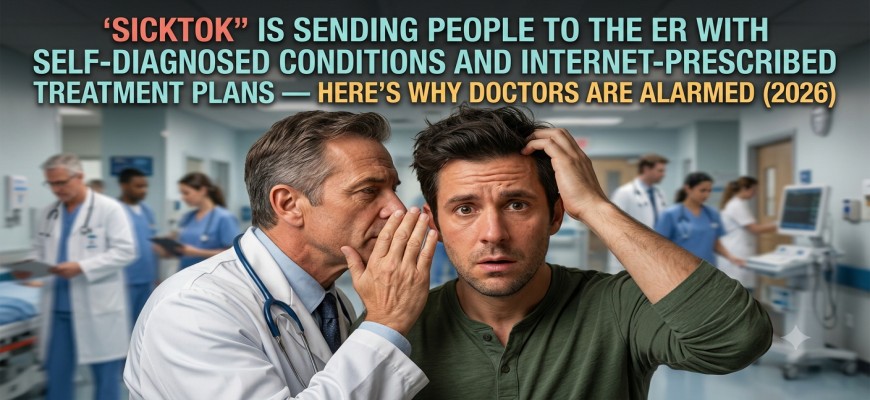 "SickTok" Is Sending People to the ER With Self-Diagnosed Conditions and Internet-Prescribed Treatment Plans — Here's Why Doctors Are Alarmed (2026)
The "Cortisol Cocktail" Everyone's Drinking to "Heal Adrenal Fatigue" Is Based on a Condition That Doesn't Exist
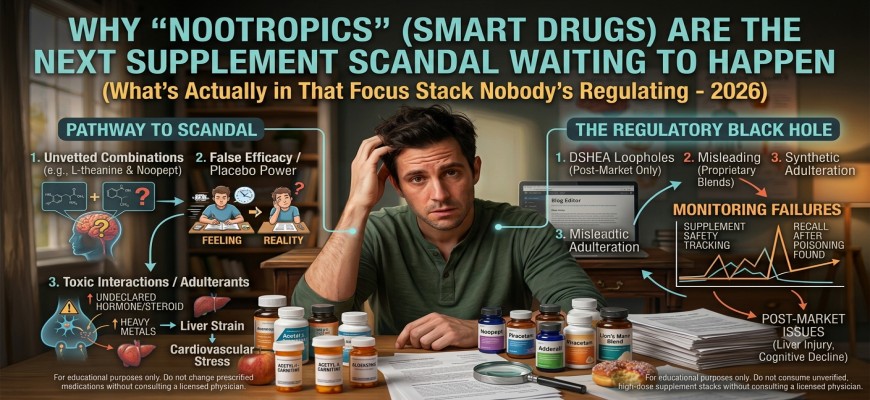
Why "Nootropics" (Smart Drugs) Are the Next Supplement Scandal Waiting to Happen — What's Actually in That Focus Stack Nobody's Regulating (2026)
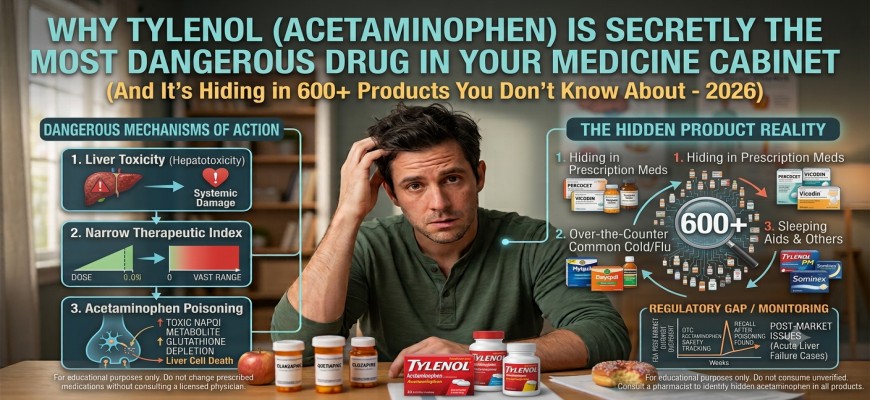
Why Tylenol (Acetaminophen) Is Secretly the Most Dangerous Drug in Your Medicine Cabinet — And It's Hiding in 600+ Products You Don't Know About (2026)
"SickTok" Is Sending People to the ER With Self-Diagnosed Conditions and Internet-Prescribed Treatment Plans — Here's Why Doctors Are Alarmed (2026)
The "Cortisol Cocktail" Everyone's Drinking to "Heal Adrenal Fatigue" Is Based on a Condition That Doesn't Exist
Why "Nootropics" (Smart Drugs) Are the Next Supplement Scandal Waiting to Happen — What's Actually in That Focus Stack Nobody's Regulating (2026)
Why Tylenol (Acetaminophen) Is Secretly the Most Dangerous Drug in Your Medicine Cabinet — And It's Hiding in 600+ Products You Don't Know About (2026)