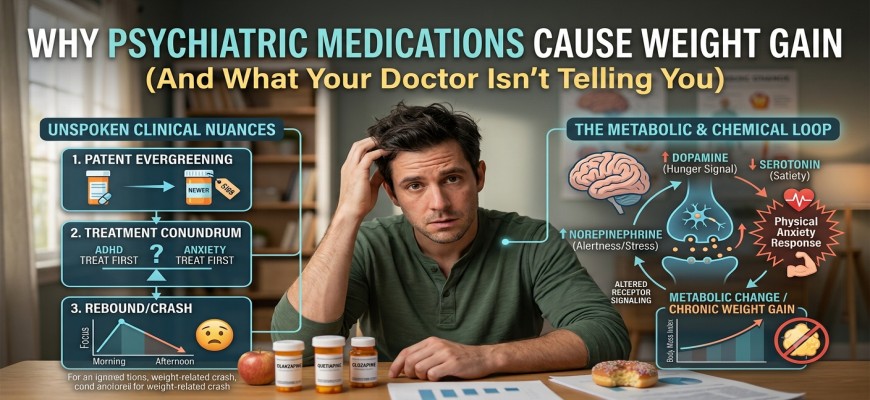
A pharmacist's guide to understanding medication-induced weight gain, metabolic effects, and practical strategies to prevent or reverse it without stopping mental health treatment.
You started psychiatric medication because you needed to. Depression was crushing. Anxiety was paralyzing. Your medication worked. Within weeks, your mood improved. Your sleep normalized. You felt like yourself again.
Then around month three, something shifted. Your clothes felt tighter. The scale crept up 5 pounds. Then 10. By month six, you've gained 20 pounds despite eating the same food and exercising the same amount. You mention it to your psychiatrist. They say: "That's a known side effect. Most people adjust. It's worth it for your mental health."
But you're devastated. You didn't exchange one health crisis for another. You're wondering: Is this inevitable? Are there medications that don't do this? Can I lose the weight? Should I stop the medication?
The answer is nuanced. After 18 years of pharmaceutical practice specializing in psychiatric medications, I can tell you: medication-induced weight gain is real, it's neurochemical, and it's often preventable. Most psychiatrists don't know the strategies that actually work, but they exist. This guide explains what's happening in your body and what you can actually do about it.
Psychiatric medications affect your brain's neurotransmitter systems. Most commonly, they target serotonin, dopamine, and norepinephrine. These same neurotransmitters regulate not just mood and anxiety, but also hunger, satiety, metabolism, and energy expenditure.
When you alter these systems pharmacologically, weight gain becomes almost inevitable unless you actively counteract it.
Your hypothalamus is a tiny region at the base of your brain that controls hunger and satiety. It has two opposing systems:
Many psychiatric medications (particularly antipsychotics and some antidepressants) affect the balance between these systems by blocking serotonin and dopamine receptors in the hypothalamus.
Result: Your satiety center gets dampened. You don't feel full. You eat more. The neural signals telling your brain "you've had enough" are weakened.
Dopamine is your brain's "reward" neurotransmitter. It drives motivation and pleasure from food. Psychiatric medications (especially antipsychotics, some SSRIs) can lower dopamine availability.
What this causes: Your brain craves dopamine-producing activities. Food becomes a potent dopamine source. You develop intense cravings for high-calorie, high-sugar foods—the foods that produce the most dopamine surge.
This isn't laziness or lack of willpower. Your brain is literally driving you to seek reward from food because the medication has compromised your dopamine system.
Some psychiatric medications don't just increase appetite; they actively reduce how many calories your body burns.
How this happens: Medications that block norepinephrine receptors reduce your sympathetic nervous system activity (the "go" system). Your metabolic rate drops. You burn fewer calories at rest.
Measurements show patients on certain antipsychotics burn 15-20% fewer calories daily—even when weight-matched to controls. This isn't behavior change; it's pharmacology.
Some psychiatric medications cause insulin resistance or alter how your body processes glucose. This is distinct from simple weight gain—it's metabolic damage.
What happens: Your pancreas becomes less sensitive to glucose. More insulin is needed to achieve the same glucose control. Your body stores more calories as fat, especially abdominal fat.
You can exercise and eat well and still gain weight because your metabolic efficiency has changed at a hormonal level.
Not all psychiatric medications cause equal weight gain. Here's the evidence-based ranking:
| Medication Class/Drug | Average Weight Gain | Timeline | Mechanism | Risk Level |
|---|---|---|---|---|
| Olanzapine (Zyprexa) | 10-15 lbs (4-7 kg) | 3-6 months | Appetite increase + metabolic slowdown + glucose dysregulation | HIGHEST |
| Clozapine (Clozaril) | 10-15 lbs (4-7 kg) | 3-6 months | Appetite increase + strong metabolic effects | HIGHEST |
| Quetiapine (Seroquel) | 7-12 lbs (3-5 kg) | 2-4 months | Appetite increase + modest metabolic effects | VERY HIGH |
| Risperidone (Risperdal) | 5-10 lbs (2-4 kg) | 3-6 months | Dopamine blockade + appetite increase | HIGH |
| Aripiprazole (Abilify) | 2-5 lbs (1-2 kg) | Variable (months to years) | Minimal appetite effects; variable metabolic effects | MODERATE |
| Sertraline (Zoloft) | 2-7 lbs (1-3 kg) | 6-12 months | Appetite increase in subset; metabolic neutral for most | LOW-MODERATE |
| Paroxetine (Paxil) | 5-10 lbs (2-4 kg) | 6-12 months | Appetite increase more common than other SSRIs | MODERATE |
| Fluoxetine (Prozac) | 1-3 lbs (0.5-1 kg) | Variable | Often neutral or slight weight loss initially | LOW |
| Bupropion (Wellbutrin) | -3 to -5 lbs (weight loss) | Ongoing | Dopamine/norepinephrine increase; appetite suppression | PROTECTIVE |
| Lamotrigine (Lamictal) | 1-3 lbs (0.5-1 kg) | Variable | Metabolically neutral | LOW |
| Lithium | 5-15 lbs (2-7 kg) | 3-12 months | Appetite increase + thyroid effects + water retention | HIGH |
Antipsychotics > Mood Stabilizers > Lithium > SSRIs > Bupropion for weight gain risk
If you're on an antipsychotic and gaining significant weight, the medication class—not just the specific drug—is the culprit.
Weight gain on psychiatric meds isn't one mechanism. It's usually multiple overlapping effects working together.
What happens: You're hungry more often. Portion sizes feel smaller. The signal that says "you're full" is quieted.
Duration: Usually starts within weeks; can persist indefinitely
Which meds: Olanzapine, clozapine, quetiapine, risperidone, lithium, paroxetine
What helps: Eating smaller, frequent meals; high-protein snacks; drinking more water; low-calorie density foods (lots of volume, few calories)
What happens: You crave carbs and sugar intensely. These aren't normal hunger—they're compulsive cravings for specific foods.
Why: Dopamine depletion from medications. Your brain seeks dopamine release from high-glycemic foods.
Which meds: Antipsychotics, SSRIs
What helps: Chromium picolinate supplementation; inositol; managing blood sugar (preventing crashes that trigger cravings); frequent small meals
What happens: You burn fewer calories at rest. Your thermic effect (calories burned digesting food) decreases. Even "clean eating" doesn't produce weight loss.
Why: Reduced sympathetic nervous system activity; altered hormonal signaling (thyroid, cortisol)
Which meds: Antipsychotics, tricyclic antidepressants, lithium
What helps: Exercise (especially resistance training—builds muscle, increases resting metabolism); thyroid monitoring; adequate protein intake
What happens: Some of the weight gain is water retention, not just fat. Lithium especially causes significant fluid retention.
Why: Altered sodium/potassium balance; hormonal effects (thyroid, cortisol changes)
Which meds: Lithium, some antipsychotics
What helps: Adequate hydration (paradoxically helps fluid balance); sodium monitoring; thyroid testing
Most medications don't cause immediate weight changes. Your metabolism doesn't shift in days.
This is often the first sign. You're hungry more. Snacking increases. Portion sizes grow. If you catch this early and implement strategies, weight gain is preventable.
If appetite increase hasn't been addressed, weight gain becomes significant. You're now 5-10 pounds up. This is the critical window to intervene.
Some people plateau at 10-15 pounds. Others continue gaining. Individual variation is huge. Metabolic effects (not just appetite) compound at this stage.
If no interventions, most people reach a new weight set-point. Weight gain typically stops after 12-18 months but remains if the medication continues.
Months 2-4 are when prevention matters most. If you're already 15+ pounds up by month 6, intervention is harder. Start NOW if you're noticing appetite increase, not later when weight is already gained.
This is the part doctors don't explain. Psychiatric medication-induced weight gain isn't just "you're eating more calories." It's metabolic dysfunction.
Some medications (olanzapine, clozapine, quetiapine) cause insulin resistance—your pancreas works harder to achieve the same glucose control. This is problematic because:
You can't "diet away" insulin resistance. Exercise and medication management are required.
Lithium commonly causes hypothyroidism (underactive thyroid). Even "normal" TSH ranges can represent slower metabolism than your baseline.
Hypothyroidism reduces metabolic rate 10-20%. Weight loss becomes nearly impossible without thyroid treatment.
Leptin is your body's "satiety hormone." It tells your brain "you have enough energy; you can stop eating." Some psychiatric medications interfere with leptin signaling.
Result: Your brain doesn't perceive fullness correctly. You remain hungry despite adequate energy stores. The appetite problem becomes neurological, not behavioral.
| Risk Factor | Impact on Weight Gain | Modifiable? |
|---|---|---|
| Genetic predisposition to weight gain | 3-5x higher risk | No (but manageable) |
| Age <30 | 2-3x higher gain | No |
| Female gender | 1.5-2x higher gain | No (hormonal differences) |
| Baseline overweight/obesity | Higher percentage gain | Partially |
| High baseline appetite | 2x higher gain (medication amplifies) | Partially |
| Poor diet quality at baseline | 2-3x higher gain (medication triggers more cravings) | Yes |
| Sedentary lifestyle | 2-3x higher gain (no calorie burn to offset) | Yes |
| Poor sleep (baseline) | 1.5-2x higher gain (hormone dysregulation) | Yes |
| High stress | 1.5-2x higher gain (cortisol + medication effects) | Partially |
| History of weight cycling/yo-yo dieting | Higher gain (metabolism adapted to defense) | Partially |
If you check multiple boxes, proactive intervention is essential. Weight gain isn't inevitable, but it requires effort.
Not all psychiatric meds cause equal weight gain. If you're just starting:
Lower weight gain risk: Bupropion, fluoxetine, lamotrigal, aripiprazole
Higher weight gain risk: Olanzapine, clozapine, quetiapine, lithium, paroxetine
What to discuss with your psychiatrist: "I'm concerned about weight gain with psychiatric medications. Are there options that are weight-neutral or weight-protective?"
Many psychiatrists will work with you on this if efficacy permits.
Don't wait for weight gain. Start these when you start the medication:
Satiety-focused eating (not calorie restriction):
Don't: Restrictive dieting. Your medication-dysregulated brain won't respond normally. Restriction triggers more intense cravings.
| Supplement | Dose | Timing | Purpose |
| Metformin | 500-1000 mg daily | With meals | Insulin sensitivity; weight prevention |
| Chromium Picolinate | 200-400 mcg daily | With meals | Reduces carb cravings |
| Inositol (Myo-inositol) | 2-4 g daily | With meals (split dose) | Insulin sensitivity; carb metabolism |
| Omega-3 Fish Oil | 2-3 g EPA+DHA daily | With meals | Metabolic support; inflammation reduction |
| Vitamin D | 2000-4000 IU daily | With food | Mood support; metabolic regulation (if deficient) |
If weight gain has already occurred, these evidence-based strategies actually work:
Aerobic + Resistance Training Combination:
Why this works: Exercise combats multiple mechanisms of medication-induced weight gain: it increases energy expenditure, improves insulin sensitivity, reduces appetite, improves mood (helps depression that makes weight loss harder).
Recent evidence: GLP-1 drugs (originally diabetes medications, now used off-label for weight loss) significantly reduce weight gain on psychiatric medications.
How they work: Enhance satiety; slow gastric emptying; reduce cravings; improve glucose control
Typical results: 5-15 lbs weight loss over 3-6 months, even with no other changes
Important: Expensive; requires doctor supervision; can have side effects (nausea). But evidence-based for this specific problem.
If weight gain is severe, discuss switching to a lower-risk medication:
Switching from olanzapine to aripiprazole can result in 5-10 lbs weight loss. Switching from paroxetine to fluoxetine can result in 3-5 lbs loss.
Important: Only switch if efficacy permits. Don't sacrifice mental health stability for weight control. But if the current medication is working adequately for mental health AND causing severe weight gain, switching is a legitimate option.
The decision should be collaborative: You, your psychiatrist, and your medical doctor discussing risk-benefit for your specific situation.
Good psychiatric care includes monitoring for metabolic side effects. Here's what you should expect:
Baseline (before starting med): Weight, BMI, waist circumference, blood pressure, fasting glucose, lipid panel
Every 3 months first year: Weight, blood pressure
6-12 months: Fasting glucose, lipid panel repeat
Annually: Full metabolic panel
Baseline: Weight checked, little else
Follow-ups: Mental health symptoms assessed; weight often not discussed
Metabolic monitoring: Rarely done systematically
Result: Problems discovered years later when diabetes or metabolic syndrome is established
What you should request: "I'm concerned about metabolic side effects from my medication. Can we do baseline labs and recheck periodically? I want to catch problems early."
Good psychiatrists will be happy to do this. If yours refuses, consider seeking a psychiatrist who takes metabolic monitoring seriously.
No, but it's common and requires active prevention/management. Some people gain 30+ lbs; others gain none. Genetics, lifestyle, medication choice, and early intervention all matter. If you start preventive strategies immediately (exercise, diet, metformin if needed), you can often minimize or prevent significant weight gain.
Absolutely not. Untreated psychiatric illness is far worse than medication-induced weight gain. Mental health stability is the priority. But within that priority, discuss weight management with your doctor. Options exist: different medications, preventive strategies, active interventions. Don't sacrifice mental health, but don't ignore weight gain either.
Yes, but it's harder than normal weight loss because your medication has changed your metabolism and appetite signals. Standard "calorie restriction" often doesn't work because hunger is medication-amplified. Strategies that work: high-protein diet, exercise (especially resistance training), metformin, possibly GLP-1 drugs, and possibly medication switching if weight gain is severe and mental health permits.
Many psychiatrists prioritize symptom relief above all else. They may view weight gain as acceptable side effect cost. This is incomplete medicine—weight gain has serious health consequences (diabetes, heart disease) and psychological consequences (body image distress, medication non-adherence). Good psychiatric practice should discuss weight risk and prevention strategies upfront. If yours doesn't, you can raise the issue.
Both. Some medications (lithium especially) cause water retention. But most weight gain is fat, particularly visceral fat (around organs). Water makes up maybe 20-30% of total weight gain; the rest is fat mass. This matters because fat causes metabolic problems (diabetes, inflammation), while water doesn't. But both should be managed.
Mostly yes—your metabolic rate will normalize after discontinuation. However, insulin resistance may persist for months. And most people don't stop psychiatric medications (they need them). The focus should be maintaining mental health stability while managing weight actively, not hoping to stop medication to lose weight.
Psychiatric medication-induced weight gain is real neurochemistry—appetite dysregulation, metabolic slowdown, and metabolic damage working together. It's not inevitable if caught early, and it's manageable even if it develops. The key is starting prevention immediately (exercise, diet, possibly metformin) rather than accepting weight gain as an unchangeable cost of treatment. Choose lower-risk medications when possible, monitor metabolic markers actively, and work with doctors who take weight management seriously. Mental health and physical health don't have to be trade-offs.
Your weight gain on psychiatric medication is not a character flaw. It's not laziness or weakness. It's what happens when medications alter the neurochemical systems controlling hunger, fullness, cravings, and metabolism. But understanding the mechanism means you can fight it effectively.
You deserve mental health treatment that works without sacrificing physical health. This guide gives you the knowledge to advocate for that.

 Fetroja (Cefiderocol) for Complicated UTIs: First Siderophore Cephalosporin and the Mortality Warning Every Patient Should Know (FDA Approved 2019)
 Exblifep for Complicated UTIs: FDA Approval, Efficacy, & Usage Guide
 Nuzyra (Omadacycline) for Pneumonia and Skin Infections: Modernized Tetracycline with IV-to-Oral Options (FDA Approved 2018)
 Zemdri (Plazomicin) for Complicated UTIs: Newer IV Aminoglycoside for Resistant Infections (FDA Approved 2018)